At the end of last week, I finished reading "The Girl that Kicked the Hornet's Nest," the third book in Stieg Larsson's startling trilogy. I'd first heard about Larsson in 2008 on NPR in one of Martha Corrigan's erudite but effortlessly seductive book reviews. Corrigan, a writer, lecturer at Georgetown, is one of NPR's jewels, the type you sit in the car with the engine off, just to hear the end of her latest installment. Don't know if it’s the timbre of the voice or the whip smart things it says, but I remember exactly where I was, when I first learned about Stieg, Blomkvist and Salander, (heading north on 11th, turning on Arch Street. I remember exactly what I thought, (that though I'm not much of one for mystery novels, this sounds just off-kilter enough for my tastes).
Perhaps, I was more receptive because I'd just finished reading Eliot Patttison's brilliant Skull Mantra, itself an offbeat murder mystery set in post-occupation Tibet. So okay, okay, I've found my "MM niche." Give me a tale of culture totally alien to mine own, kill off some characters in a grizzly fashion and let me follow the trail of a whip-smart investigator and I will read and read …

Saturday, July 17, 2010


Monday, May 31, 2010
Overheard on Meredith St.: They should'a known better

(Sidewalk Society HQ, in colder times)
The TV has been off here for awhile. People have been sending links to the BP disaster and I've been avoiding them. I've got a strong stomach, but it does not include live executions. I can't watch live executions.
I couldn't go to the movie The Stoning of Soraya M or A Mighty Heart and couldn't watch internet video of Daniel Pearl. I've avoided everything BP related like the wife in the famous Isaac Asimov sci fi story who decided she could no longer look at the sun after her astronaut husband fell into it. Mel Gibson's necro-p*rn depictions of death in Brave Heart and Passion of the Christ pushed limits I don't want pushed. It physically sickens me. It diminishes my optimism for the survival of our species.
But nobody can live in a media-saturated world like ours and not get some of the ooze on you. So satellite images of slick swirls and undersea plumes along with the usual oil drenched herons and dead fishies have been washing up on my shores. I won't bore you. You've seen them. Predictably, it's been eating at me, so last night I took it outside for a confab with two of the charter members of our Meredith St. Sidewalk Society. (So dubbed par moi.)
A questioned "how could they not have planned for this." She believed that with stakes as high as these, an ultimate cork, a kill switch should have been in place from the start and should have been triggered immediately. How could they not have foreseen this? A is a social worker. She is well-versed in society's rhetorical questions.
G, who works as a corporate buyer said that it is a systemic management problem. Somewhere along the line some technical person filed a report or expressed a reservation that he or she sent up the line. The techs, the engineers expect their bosses to champion and air their concerns to their bosses. But the reality is that contrarian voices are always quashed in favor of consensus and group think, which G says is very powerful.
For the corporate animal--life, income, future depend on going along. Projects must move to completion or heads will roll. You better think long and hard before you stand up and say "halt the presses." I said that from Challenger to 911 to Exxon Valdez, decisionmakers have historically devalued their internal watchdogs in favor of expedience. It is in our nature to do so. It isn't until truly large catastrophic failure that we wise up. For the oil industry, the Exxon Valdez wasn't enough. Maybe there aren't as many double-hulled tankers out there as used to be but the industry's tepid response shows they didn't get it then. They do now. This industry has shown itself as failure-ready as any.
A pointed out that given the ecological disaster they cause that it should be different. That they should be held to a higher standard. How could I disagree when it is the shame of our generation, yo Boomers, that we didn't suck it up for the next generation. Back in the 70's when we had another oil crisis and a president telling us that we needed to make some sacrifices, if we'd started investing hard capital in clean energy, then our kids wouldn't have to suck it up. Even investing in post-3 Mile Island nuclear power is a sober choice we should've done a long time ago.
The old peanut farmer was right, but what he was saying was too damned unpleasant. Our solution was to kick out the farmer and hire the actor. The actor had a much more upbeat message. Our kids will pay for the expedient choices we've made in the last 30 years. We won't be alive to see it. G disagreed with that last statement. He said ecological collapse is happening so fast, that we might. He smiled wryly as he said it.
It is human nature to ignore our watchdogs until it is too late. Global warming and more grotesque ecological disasters will kick our butts. Whether we'll pull them out of the fire in time to save our species is anybody's guess. I don't like this guessing game. A couple of years ago, I had to write an intro to astronaut John W. Young who was the keynote speaker for a big corporate meeting. Young's NASA bio page tells why he remains so adamant about space exploration.
"He [Young] will continue to advocate the development of the technologies that will allow us to live and work on the Moon and Mars. Those technologies over the long (or short) haul will save civilization on Earth." What he's saying is that he thinks we'll "screw the pooch" here on our homeworld and our ability to colonize other worlds will determine our outcome as a species. This is an astronaut, not an end of the world crackpot.
The oil company execs in this Reuter's article are shocked. They didn't anticipate this. Some commenters say that you can't lay this on the desk of the CEO, that the blame is as diffuse as an undersea plume. G, A and I think that's dead wrong. Every CEO's job is to protect and nurture their watchdogs and contrarions. They are often the only people making real sense. I say if you are a CEO, your lack of disaster management is your personal disaster. That's the job. Suck it up.
Is crisis preventable? Not 100%. Is it manageable? How could we do any worse than we do now? Hope hangs on a thread, (but she wasn't at last night's meeting). It's coming on summer here at Sidewalk Society headquarters, (shown above in colder times). Is it winter in America? Increasingly, serious and sober people are saying it is. We damned well need to start listening to them.
Tuesday, February 23, 2010
LaptopGate--Privacy v. Intrusion in Lower Merion, PA
 Somewhere, in the basement of a top secret Homeland Security NSA computer lab, a former hacker is beta-testing a super-sniffer, call it WebSnoop 1.0, that can be deployed over the public net to track cookies, view histories, download files and activate webcams, microphones and keyboards. The new release of "Snoopy" will have modules to scrape passwords and change private files and directories into networked and viewable ones. It can create and send incriminating email from your account. It can track your every move via your cellphone and log all your ATM and credit transactions. It won't only know each stick of gum you buy, but how long you take to chew it and where you throw it away. Paranoid fantasy? Hollywood science fiction? You wish cats and kitties.
 Today, Tuesday, a rainy day with no prospect of sunlight in sight, I head over to my Facebook wall in search of inspiration. I clip a lot of links and stick them on Facebook sometimes to get the pulse of my online friends; but usually just because something interests me and I plan to get back to it later. Since it broke yesterday, I’ve been following the very interesting scandal that rocked the sleepy borough of Lower Merion, PA. It may be coming soon to a laptop near you. Perhaps nearer and sooner than you think.
 Lower Merion is a well-heeled, progressive community whose teens are issued Macbooks for schoolwork. Laudable, but one young lad decided to engage in some unscholarly activity in his bedroom, with only his laptop for company. It doesn’t take much imagination to figure the sort of activity a troubled teen male might be engaged in. The real trouble began when the school’s vice principal remotely turned on his webcam, snapped a picture of him in his bedroom and sent it, with warning to him and his parents.
The notoriety has gotten so great that the lawsuit already has its own Wikipedia page.
Also check out this gizmodo link, this blog from the NY Times and the FBI investigation that has ensued.
That’s the kind of publicity that nobody wants, but we need, now more than ever.
Friday, February 5, 2010
"Heirlooming" and the Family Network

A friend of mine in the biz sent the above link to a very interesting article by David Pogue, tech maven of The Times on the perils of "data rot" as they pertain, here to family videos.
Pogue writes:
As you may be aware, we're about to enter a whole new era of data rot, one of the biggest and most personal of all: consumer videotape is going away. At the Consumer Electronics Show last month, I was astounded to see that Canon, for example, has only one MiniDV (tape) camcorder model left—which hasn't been updated for several years. The other companies are following suit. It's all about built-in hard drives or memory cards now. That development hit me especially hard, because I've always loved documenting my family.
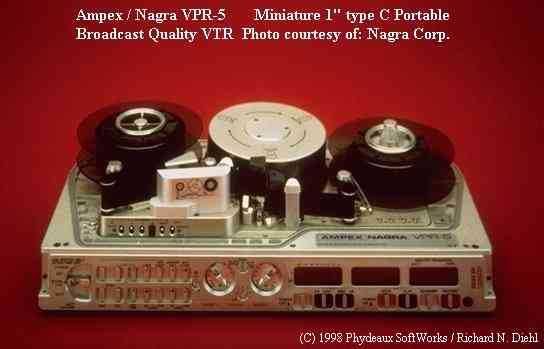
It got me thinking about the work I've done to establish our own clan's Family Media Network but as you can see, I take a different tack than Pogue. I've read his column and don’t always know what to make of him. If he’s such a tech maven, why should he be stymied by, or even surprised with the phasing out of tape as a storage medium? Tape? Take it from somebody who used to thread portapaks and 1” Ampex machines by hand with it. I won’t miss it!!!! No siree.
Bennett interviewed my Dad about his mother over the phone for a school project. I have about 15 minutes of Dad reminiscing about his mother's anti-child labor marching days. This gem will be easy to deal with. I don't have to do anything. It's already an MP3 file.
Wednesday, February 3, 2010
Lists, Advice and the joys of reading aloud.

 "You don't know about me without you have read a book by the name of The Adventures of Tom Sawyer; but that ain't no matter." —Mark Twain, Adventures of Huckleberry Finn (1885)
This is the second child I've read aloud to from this, perhaps the most important American work of fiction by arguably the greatest American author. I tell him its for his erudition, but it's really for me. I maintain a "selfish selflessness" when it comes to reading to the boys. I only read works I love, so as best to communicate my enthusiasm for the work and for reading in general. Huckleberry Finn is perhaps my favorite novel of all time. Such a ripping adventure yarn, so simply written, in such a compelling voice on so many complex subjects. Racism, slavery, morality, identity, personal loyalty, the relationships of fathers and sons ... layers and layers, on and on.
That said, imho, the line is only memorable because the book is so damned good. But does that make it great? I always thought the line was a bit of a "throw-away," an understated device Twain used to quickly move readers from A to B. He gives permission to read Huck (his masterpiece) without having first read TS (his great work). Huck Finn is chockfull of amazing lines, all far more memorable than its first line.
How about this passage from Chapter 16, where we stopped last night:
Setup--Huck is bedeviled by his conscience, having had an opportunity to do the "right thing" and give Jim up. But for reasons he doesn't fully understand yet, he doesn't.
 "I knowed very well I had done wrong, and I see it warn't no use for me to try to learn to do right; a body that don't get started right when he's little ain't got no show -- when the pinch comes there ain't nothing to back him up and keep him to his work, and so he gets beat. Then I thought a minute, and says to myself, hold on; s'pose you'd a done right and give Jim up, would you felt better than what you do now? No, says I, I'd feel bad -- I'd feel just the same way I do now. Well, then, says I, what's the use you learning to do right when it's troublesome to do right and ain't no trouble to do wrong, and the wages is just the same? I was stuck. I couldn't answer that. So I reckoned I wouldn't bother no more about it, but after this always do whichever come handiest at the time. "
What makes a great opening line? Is it the great poetic resonance that presages the story like a bolt of lightning? Is it how in a single brushstroke, it intros a memorable protagonist or sets the stage for the work's central conflict?
What virtue is inherent in a novel's first line that we as writers should study, know and emulate?
I always thought that the first lines of short stories were more "important" because of the economy of short stories v novels. Novels are about slow-cooking, delicate, complex nuanced flavors, while short stories offer sharper, faster brighter flavors but by necessity, less complexity. The short story format only allows you to hint at complexity, i.e., negative space, rather than develop it. In cooking, a good reduction, water is all that boils off. In a good short work or a good long work, there is no excess water. So, I'd argue that it's not possible to retain ALL the flavors of a long work in a short work, no matter how skilled or brutal an editor you are.
To wit, this link from Writer's Digest for those of us considering, editing or pulling our hairs out over a novel in progress. Some solid advice within, which I'm taking to heart:
My how I roam and ramble. Twain would have me set on a raft without a paddle.
Monday, January 4, 2010
My Review of Roku HD-XR Player
Extended range wireless (WiFi N) delivers the best quality video virtually anywhere in your home.
TV Nirvana
By TridentPro from Philadelphia, PA on 1/4/2010
Pros: Compact, Great value, Built in Wi-Fi, Reliability, High quality picture, Video selection, Easy to use, Easy to set up
Cons: Want more video choices
Best Uses: Primary TV
Describe Yourself: Media professional, Power User, Early adopter, Home entertainment enthusiast, Technophile, Netflix fan
I am a video producer and the Roku was a Christmas present to family and self. As we don't yet have hardwire network access to the family room I had to hope that our 3Mbps DSL wireless bandwidth was enough to feed the box an acceptible signal. Setup took ten minutes and I was immediately delighted with the image quality and the speed with which movies downloaded and played. Who needs cable for movies when you have your Netflix account and one of these cool Roku boxes? What a great investment!
I only have one request/suggestion. Roku meet Hulu. Hulu, meet Roku. Make it happen guys and you both will be unstoppable.
(legalese)
Saturday, December 26, 2009
c.010101 EOY Round-up Home for the Holidays

In the year that the term defriend became the lingua franca de annum in a publication as august as the New Oxford English Dictionary, we’re certainly witnessing the dawn of the social networking era and its inevitable hyper-self-absorption as witnessed in this subsequent navel-gazing debate over whether the announcement actually meant to say “unfriend.” Unfriend/Defriend? Am I unconcerned or deconcerned? Ask me next year.
When I started cleaning my email e-Holiday card list I went first to my own modest social network on Facebook, then took a dive into LinkedIn and even Skype and Plaxo for hard to find colleagues who’ve changed addresses, jobs or locations. The social networks have proven remarkably agile at this task and I suspect will become moreso as their ubiquity increases. Gone are the days when you had to endure pop-up, spyware crap laden “Look-up applications” in order to update an email ad' or a phone number. The S-Net represents the first, albeit baby step toward each one of us being able to manage our own presence and information profile effectively and for this they are important and good. My first pass was able to garner me a brand new line on a friend I hadn’t seen in 32 years and current emails for 30 job-hoppers who hadn’t remembered to send me “I’ve moved” notices.
Once I nailed that problem down, (about two days over a 1900 entry address list), I tackled a hair-puller that has plagued me for four years. This one involved how Outlook sends graphic files. I created my nice little e-card ...

... but repeated sends revealed that somehow Outlook was mashing it up and sending this

Ugh!!!
My seasonal nightmare four years running. Tried saving in all formats and all resolutions. Always the SOS. I could find nothing in the online literature that suggested why this was so, but a combination of research and trial and error and dumb ### luck finally yielded a way to insert a modestly attractive gif file into the Outlook message envelope and not have it look like hash after it’s sent. For those of you on my e-card list. This is why you got it today, rather than a week ago. For those of you who employ high power graphics programs and remailers or software designed to block such email, you don’t care, so read on. Anybody interested in how I did it can contact me. I’ll spill all for the benefit of science.
My seasonal nightmare four years running. Tried saving in all formats and all resolutions. Always the SOS. I could find nothing in the online literature that suggested why this was so, but a combination of research and trial and error and dumb ### luck finally yielded a way to insert a modestly attractive gif file into the Outlook message envelope and not have it look like hash after it’s sent. For those of you on my e-card list. This is why you got it today, rather than a week ago. For those of you who employ high power graphics programs and remailers or software designed to block such email, you don’t care, so read on. Anybody interested in how I did it can contact me. I’ll spill all for the benefit of science.
InterFACEbook
My 15 year old asked today whether it was random chance that Facebook made it so big rather than MySpace or other social sites and I asked him why he thought it was so. He thought for a moment then said perhaps it was “the menu and stuff” which I took to mean “interface” and we had a “teachable moment” about interface design and its importance to personal information management. His is the interface generation. They juggle icons and menus like my generation manipulates words and phrases. We talk about how much catching up they have to do to bring depth and nuance to their conversations but our generation has just as much catching up to bring conversation to our depth and nuance.
Nobody has really monetized social network applications yet, but I have a feeling that the social networks have created the next great wave in personal computing and that we’re just on the lift of the swell of the Web 3.0, the “you web” where you can do everything from start a revolution to learn what your f&f had for dinner.
The social networks bring another small but not so minor innovation to the desktop, particularly if you use Outlook, like much of corporateAmerica
The social networks bring another small but not so minor innovation to the desktop, particularly if you use Outlook, like much of corporate

There are sources of stuff “they don’t want you to know about” But you have to go looking. My top 5 choices for stories to follow in 2010 are:
1. Do you really think the Obama administration will have the balls to go after financial reform when the Treasury Department is just another revolving door for Wall Streeters?
2. Who the ### is Joe Lieberman to take the public option off the table and why the Dems are allowing the Senator from The Insurance State to steal true healthcare reform from us?

4. Save a tree and save our children’s’ spines. When will Amazon wake up and put a Kindle in every student’s backpack?
5. The strange particles that bombard us when politics and science collide over global warming. Will we get the real story before they ship us all off to Mars?
These are my hot buttons. You have the right to your own damned buttons but things like these really @!$$ me off and when they’re deliberately under-reported that really @!$$es me off even more. Stories like these are not right at your fingertips. You have to stretch a little. Stretching is good. Testing your calcium against diverse beliefs (as in a couple of above links) is good for the ethical bone structure and results in shining white teeth.
Make 2010 the You Web Year. Make the “You Web” yours and put it/yourself out there for the world to see. You even have the right to go through other people’s stuff (within limits they’ve established.) Most recently, you now have the right to aggregate and interface to satisfy your own peculiarities and curiosities. Poke it, prod it. Ride it for all its worth. It’s never been easier, more fun or more popular.
Just remember the words of Horace, the Roman poet who urged us and all schoolboys to “carpe diem” also warned “Semel emissum volat irrevocabile verbum.”
Just remember the words of Horace, the Roman poet who urged us and all schoolboys to “carpe diem” also warned “Semel emissum volat irrevocabile verbum.”
 Once released, the word flies (or in this case drops) irrevocably.
To all Friends and Family on more than one continent who care enough to keep coming back to read, mille mille grazia.
To all …
Happy END OF 2009 with BIG HOPES for Happier 2010!
Friday, October 9, 2009
The Curse of Dr. Barnes
 Before
 After
The Barnes Foundation, according to its own website "is home to one of the world's largest collections of Impressionist, Post-Impressionist and early Modern paintings, with extensive holdings by Picasso, Matisse, Cézanne, Renoir and Modigliani, as well as important examples of African sculpture."
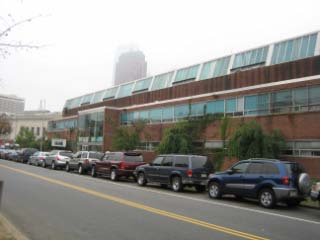
The design for the new home of the worldclass impressionist collection amassed by the uber-contentious Dr. Al Barnes bears an eerie and unwelcome resemblance to the Juvenile Detention Center which it replaces.
A Bit of Barnesian Background
The Barnes Collection has one of the most embattled legacies in the history of American art collection, even inspiring a movie with the overwrought title “The Art of the Steal." The good doctor who died in 1951, made a fortune in nostrums and patent medicines. He also had a true talent for shopping in Europe and managed to scoop up a lot of "bargain basement" art at firesale prices. I haven't seen "The Art of the Steal." I wonder if it even touches on how this shiny collector and creator of Argyrol, nickled the starving artists whose works he bought for a song. But that's art in the age of commerce for you--a sad tale, but scarcely worth a historical footnote.What makes the infamous Barnes backstory fascinating is that Doc B had no great love of the city and its business and cultural leaders. Seems they turned up their narrow blue noses at his self-made, new money social ascendancy, so he got his payback. Using his collection as a sort of cultural hostage, he forged a will he clearly intended to be unbreakable. Then he used it as a hammer to hit the art establishment over the head with, long after he was gone. Basically, the will said that The Collection could never:
- Be broken up
- Exhibited/toured
- Or worse, moved!
Maybe a hundred years hence, the Barnesiacs and the township of Merion will band together and take a page from the Egyptians who after decades of righteous contention, were able to repatriate their priceless antiquities from the Louvre. The fact is that languishing out in leafy Merion, PA, mired in restrictive visitation policies, the prickly half-love of its neighbors and the bizarre internecine politics of its dysfunctional board, the Foundation and its Collection was drowning in red ink. The Pew and the Lenfest Foundations stepped in and threw Barnes a lifeline, but the bailout inked a devil's deal. It required the collection to move to the city where it can finally be appreciated by Philadelphia residents and visitors without special papal dispensation.
This battle waged famously for years in Philadelphia Orphan's Court. Recently Barnes' grudge-drenched will was broken in a gust of sulfur and smoke and what I'm sure are several legal precedents. Philadelphia Lawyers may moan, but art lovers of all stripes are the beneficiaries. Albert Barnes' vitriol was ultimately his foundation's aqua regia. The experience of the Barnes an object lesson in how even great philanthropy can run aground when a benefactor's nits and gripes overshadow a more expansive, enduring vision of contribution to society. Anger, art and philanthropy make for a gritty salad.
I'm just a little guy with a big mouth and I doubt I'll ever be able to put the following principle to the test. But I believe that if you have the resources to acquire great art, it comes with an implicit noblesse oblige to share your spoils with society. What Barnes did was like commissioning a Mozart symphony, then restricting its performance to his basement. Great art demands the greatest possible audience--access by ordinary people who would be its patrons. Not an elite few. However much money and power you have, you can't narrowcast a cultural legacy in perpetuity. That's the nutshell. Now back to the future.
The House that Barnes Didn't Build
Call it "the takeover of the imperial art establishment" or just call it inevitable triumph of good sense; it seems in any case to be a done deal, a baked cookie. What feels half-baked, is the design by Todd Williams and Billie Tsien. Look at their spectacular design for the Phoenix Art Museum then come back and compare. Though in an Inquirer online reader feedback poll people seem to prefer the new design by a large margin, I ask:
'Where is the visual drama worthy of the collection?'
Why must so much Philadelphia architecture be confined to pedestrian brick and stone? Why don't the commissions who rubber stamp blandchitecture like this have the cojones to point the fancy out-of-town architects back to their drawing boards with the stern admonition to really "bring it" next time. Don't the architects who design for this city have more contemporary and uplifting materials in their palettes? In the case of Williams and Tsien, they do, they just ain't sharin' it with Philly. Everywhere I go in Philly, I see new buildings going up that look like more of the same. They think they're reflecting the spirit of the city, when in my humble, each new uninspired brick and stonefaced edifice reinforces an anti-progressive, provincial frumpiness this city is trying so hard to shake off.
 It's not that I'm looking for wild radicalism like Frank Gehry's scary metal monster in Bilbao, though love it, hate it, or think it resembles a Transformer, at least it makes a impression. Inga Saffron, whose every opinion I normally dote on like a starry-eyed fanboy, praised the punched windows resembling those in the facade of the Barnes' neoclassical home in Merion.
Yawn. So what? A handful of punched windows aren't going to mollify the Barnesiacs who'd rather see their precious collection shuttered than exhibited the way worldclass art should be.
What is the virtue of such nostalgic tribute when weighed in the balance with an opportunity to create a bold, visual exclamation point to Philadelphia's aspirations to evolve as a center of art and culture? We deserve better.
Don't get me wrong, I am gladdened that this historic collection is finally about to be wrested out of its snuggery in the Land of Lockjaw, but it should come downtown and present its face to the Parkway. It should announce itself with drama and pride, not landscaping.
I walk The Parkway nearly every day. This corridor, one of my favorites in a gloriously walkable city, has so much potential. Yet I fear it will never be as grand as it could be, especially if one of its anchor tenants turns its face away.
"It is an absolutely masterful design. Those who don't understand the design are looking at it from a selfish point of view," according to Moe Brooker of the Philadelphia Art Commission.
I'm just a selfish guy. Well harumph!
 Am I missing something?
I think not.
 I think the old curmudgeon has spun twice and is now cackling in his grave.
Maybe there's another movie in it
Call it, "The Revenge of Dr. Barnes."
Too bad Vincent Price isn't around to play the lead.
Thursday, September 17, 2009
Losing My Identity

I'd checked everywhere, through six pairs of pants, through three closets, under my bed, in all my drawers and every room of the house. I retraced my steps and when it didn't net any results, I redoubled my efforts. Beyond humiliation, I asked friends whose houses I'd visited to check their bathrooms.
The first piece of advice friends and family gave me was to cancel my cards. I picked up the phone and actually dialed my bank. Three minutes through the annoyance of the bank's voice-automated system, I let the angels of optimism and hope triumph over the angels of caution and financial prudence. I hung up, but I'm not stupid. For the next 15 days I monitored my bank balances on a twice daily basis. I drilled my wife on any item I did not immediately recognize as a regular expense. Day by day, I held off cancelling my cards and filing for a new driver's license. So which were the better angels? You'll have to take the jump with me to find out.
Monday, September 7, 2009
Eye to Brain -- This post is too long!!!


My oldest friend, J, fellow writer and most observant critic emails:
My first take on (your blog) is hampered by my dis-inclination to read (with attention) off a computer screen. This is a real obstacle as evidenced by the efforts to produce a "reader" like Kindle. However, this may not be an obstacle for our kids but I worry about the loss of the habit of attentive, non distracted reading on our consciousness of the real, tactile world. Such may have been the medieval transition in human thought from oral tradition, bardic incantation of epic tales, wandering theatrical troupes to the emergence of print and the explosion of human knowledge.
My response:
J, I'm probably in the minority of early adopter types, but I still think Kindles suck and won’t get one until they get much better. Christ, they don’t even backlight, which means I can’t tote it to bed and read in the darkness while my wife sleeps. That's a deal-killer for me. I might as well sit in my comfy chair with a book or my desktop screen which has better resolution. But what's zero sum gain for one reader is a direct hit for another. I maintain each student in this country should be issued a loaded Kindle and juvenile backstrain would disappear overnight. Poor #2 Son has had to carry as many as 18 lbs. of treekill. I know, I always carry them for him on our walks from school and several times have weighed the bloody things.
From feeding to locomotion, there are some human needs so old and basic that the forms of the devices that service them are elegantly fixed by function, if not physics. Simple machines like the spoon and the wheel represent design perfection in their spooniness and wheelishness. With reading, the issue (as J points out) is also form factor, but as acquiring knowledge is a relatively new human endeavor, it is vulnerable to being pushed, bent, perhaps out of shape by the delivery mechanism. Books tire the eye less than e-screens. Portability, visibility, tactility are all easy virtues of books. Length becomes a design issue when it tires the eye and undermines rather than engages concentration.
So my essays are long and I'm faced with two choices:
Write shorter ones
/
or
\
acknowledge they are long because they have to be
to convey concepts that aren't easily condensed
and help the reader suffer through them as much as I can.
From a book aesthetic it seems artificial to mediate a solid argument with jumps, links, graphics, pictures, headlines and other publishers eye-candy to titillate tired or bored eyes. Yet, the British tabloids know exactly what they're doing with their (PG-13 rated) page three girls.
This is how we train people to write for the web. Content design born of the limitations and the audience's declining attention span. Fifteen years ago, I wrote an essay on a concept I coined as "deep interactivity" which I defined as using content driven branching and non-linear information architecture used to create the kinds of deep, meaningful resonances and complexities a reading a long passage in a story or essay provides. To quote U2, I still haven't found what I'm looking for. Perhaps the quest is quixotic.
The printed page is a linear storage device. However experimental a writer's style, it will always be linear and thereby limited. Why is linear limited? Because linear compels each user to use the author's argument architecture largely to the exclusion of his own. The disk-based nonlinear storage of content frees us from linearity, offers us search, linking, bookmarking, compact storage, but it sacrifices the best of what even the paperback has to offer, the intact human voice telling its own story from start to finish. Reading itself seems to be evolving into something we won’t understand a hundred years from now.
The bardic tales were passed by oral tradition, so Homer, Gilgamesh, the Upanishads and a handful of the great oral works fortunately survived long enough to be fixed in the amber of written language. But what we certainly lost are lesser known tales and even the finest extemporaneous interpretations of the tale, because a scribe wasn't around at a particular campfire to write it down. It would be like a 21st Century saxophonist reinterpreting John Coltrane, without any original recordings to reference from. Each oralist brought both enhancement and degradation in his ownership of the stories he committed to memory.
Modern disciples of the oral tradition, like my professional storytelling brother argue that the paradigmic shift from oral to written tradition lost something precious, i.e., storytelling as a socially binding, community-reinforced experience. In workshops, conferences and festivals all over the country, a new generation of bards are subversively deconstructing the modern media to reconstruct and reclaim the ancient oral arts.
Tactility has also suffered. I keep coming back to it as it might be at the root of what J is saying. You can touch a storyteller, hear him, smell her, hold hands with an audience member during a scary part. Emotions and social engagement are subcarrier waves for long, involved stories. Tactility is another content subcarrier.
Books have a more reserved but still profound tactility. Papers, bindings, edges, covers, fonts, illustrations, the shapes of paragraphs so fixed and legible that you can see patterns in the way the letters line up. The smell of a new book. The smell of an old one. The soft flick of a turning page, the satisfying thunk of the cover closing to assure that everything you've read and yet to read will be in exactly the same neat rectilinear package tomorrow.
The web; keyboards, speakers mice and screen. We're still clicking away. Each generation abstracts the kinesthetics of knowledge acquistion a bit further.
Yet those who only look back without looking ahead (and J is certainly not one of them) demonize the web as an anti-socializing, anti-intellectualizing force, neglect to grasp something fundamental. The web has taken giant strides toward synthesizing the instantaneous emotional resonances of the communally shared story and the archival compactness of text, adding search, networking and infinite storage, a synthesis paper can never accomplish on the same scale. Synthesis is meaning and context. Community is meaning and context. Community adds complexity. The tactility issue is addressable by bandwidth and innovation.
Today, the Kindle, tomorrow i-glasses, which will let you read the entirety of the world’s web of knowledge, while walking, but only line at a time. Or you'd rather have a v-hat that plunges you full and deep into 4-d holospace. You could experience the classics of world literature in full Sensurround without ever needing to learn how to read. Will you want to? What will change next? Will the language itself become more pictographic to balance the inverse proportionality of textual and visual literacy. Will density and complexity of information continue to degrade or can a newer, meatier sensory-augmented alphabet convey more with less.
As our generation ages and dies off, many believe the trend of information decay will accelerate until like pond scum it blankets the surface and blots the sun from the deep spaces, satisfied to be skipping along the bright and superficial, the odd and confrontational while avoiding the deep elaborate organic tide pools where complexity flourishes and well-reasoned resolutions to multivariate arguments are forged.
Are we really the last champions of "complexity" that we so smugly assume ourselves to be?
Or are we witnessing the watershed of language evolution, the indrawn breath before the explosion of the new language, new concepts and new achievement in thought and word propel us to new heights.
Or did Gutenberg, like the Beatles, get it absolutely right the first time, only to have successors dilute and degrade the medium and the message beyond all future recognition or hope.
Subscribe to:
Posts (Atom)