Wednesday, March 2, 2011
Face to Face
10:16pmMe
are you still home?
10:17pmGreg
yes if you mean Pgh.
10:17pmMe
just got K's msg about defriending ###### for Mom. I can't do that. Would need access to her account and pw to do that. So perhaps you can while there.
This is one area where Mom and I disagree, but she has the right to her own opinions and "friends"
10:18pmGreg
I can handle it...think I'll just hide ### for her...that way #### won't hound her and won't know that she isn't seeing ####'s posts unless ### posts to her directly
10:19pmMe
I thought of that and while I'd advocate hiding too, I think if she looks at her friends list, then she'll know ### is still there.
10:19pmGreg
it's a more "polite" way to ignore
we already talked about that
chances are real good ### won't
talk to her any more on FB than #### does already
10:20pmMe
abso, as long as she agrees
I've spam foldered ##### already. The crap I get from her isn't even personal email.
Just lame and stupid jokes.
The last series of Obama "cartoons" are positively racist, some of them, so off to spam she goes.
10:21pmGreg
I haven't received a single post from ### --to me, since friending.
#### is no more a part of my life now than before FB
no surprise
10:23pmMe
I am one for maintaining congeniality. which fb is a great way to do
friendship/contact but without the sticky stuff.
10:24pmGreg
I am no more/less congenial...like I said, the connection is the same as before.
I think ###, like most "collects" friends...
something I am not interested in doing
I only have about 150 people
on my list
not several hundred
10:25pmMe
I've had marvelous time reconnecting with bricks and mortar friends, some from as many as 30 years ago.
10:25pmGreg
did that with 1-2 people
most are people I already am in steady contact with on a regular basis
10:26pmMe
had a great discussion with 10 people over a photo from the early 90's ITVA. Might even inspire a reunion. Social media at its best.
Friday, December 31, 2010
Annuals and Decimals--Notes on the Passing Decade
At age 10, I had a dream about my fifth grade class going on a field trip to the moon. I actually entered the gleaming rocket ship and settled into my launch chair, but I never made it. The nuns discovered I'd forgotten my lunch money, so I was kicked off the space ship and left behind. I'd never forgotten that dream, but the last place I expected to be reminded of it was at the premiere of "Tron" this week.
My 16 year old and I settled in for the trailers and I found myself watching this theatrical Kia Optima commercial: "Sweet Dreams" with a mixture of joy, wonderment and the feeling expressed best by Roberta Flack's "Killing Me Softly." It felt like some evil mf copywriter genius at Park Pictures reached inside my head, extracted the glowing filament that best distilled all my most cherished fantasies and unfulfilled dreams and splashed them on the screen with a tagline "No one ever dreamt of driving a midsized sedan… until now.” The boy driving his bed through his fantasies turned into a driving man who watches in awe as the rocket ship of his dreams lifts off into the cosmos. He's happy in his sleek midsized sedan, but to me, it seems like a poor consolation prize.
Sunday, October 31, 2010
Chatter astride the Social Network Divide, Halloween Edition
| c.010101 is in your "face" for Halloween |
I like having a tab on my 16 year old son and knowing who his friends are through FB. I like catching up with my nephews in college and my own friends from 20-30 years ago. I like knowing that my brave friend MN is a master woodworker and though she has breast cancer I can "like" her post in which she tells all, that I can offer her support and encouragement along with dozens of others of her friends. I'm sure she'll carry a little positive buzz into her next chemo session. I love the rolicking political debates I have with farflung friends in FL, PA, CA and all over on issues as diverse as "the meaning of tolerance" "abortion" the "Tea Party." I like bating my old TU classmate who is both a Republican media consultant and though he might howl at the label, a closet liberal. One guy from FL has a real knack for throwing out a debate topic and watching people pounce all over it like wolves. This makes for lots of freewheeling intellectual interplay and just plain fun on a purely social level. If you post about what you had for lunch and that you're at work and bored, chances are I'm not going to care or answer you. It takes less than a second to engage or dismiss a trivial post, but for the rest of us, there is discourse, real intelligence out there. You don't have to look very hard for it. I have a wife, two tech-savvy boys, a business and a pretty active "non-virtual" social life.
I am done justifying the value of being an online social networker. I'm not turning into a socially maladjusted hermit for using it but you may be turning into a socially maladjusted hermit if you don't use it. Many people are saying that the social platform is rapidly becoming not just the next communications platform, but the next communications, computational do everything platform. So whatever you say about the intrusion of the media into our private lives, social media are/is here to stay and some of us have stopped puzzling over what it says about us (as a society) and started wondering what it says next.
Facebook needs some work as a "cloud ap." Doing some things on it still takes too much guesswork and clicking about. That's all about to make a radical leap.
| From geek ... |
| To chic! |
Here's what the next big leap will look like.
facespace-3D
![]() |
| FaceSpace 3D Live--What, you think it won't happen? |
Tuesday, February 23, 2010
LaptopGate--Privacy v. Intrusion in Lower Merion, PA
The notoriety has gotten so great that the lawsuit already has its own Wikipedia page.
Also check out this gizmodo link, this blog from the NY Times and the FBI investigation that has ensued.
That’s the kind of publicity that nobody wants, but we need, now more than ever.
Friday, February 5, 2010
"Heirlooming" and the Family Network
A friend of mine in the biz sent the above link to a very interesting article by David Pogue, tech maven of The Times on the perils of "data rot" as they pertain, here to family videos.
Pogue writes:
As you may be aware, we're about to enter a whole new era of data rot, one of the biggest and most personal of all: consumer videotape is going away. At the Consumer Electronics Show last month, I was astounded to see that Canon, for example, has only one MiniDV (tape) camcorder model left—which hasn't been updated for several years. The other companies are following suit. It's all about built-in hard drives or memory cards now. That development hit me especially hard, because I've always loved documenting my family.
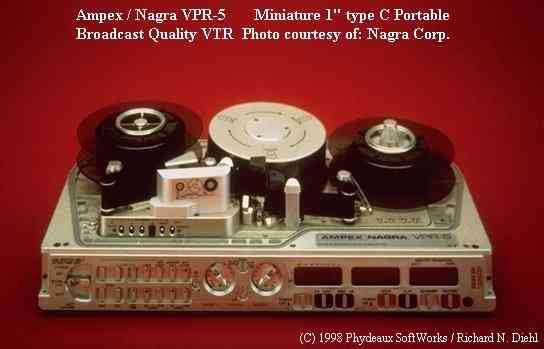
It got me thinking about the work I've done to establish our own clan's Family Media Network but as you can see, I take a different tack than Pogue. I've read his column and don’t always know what to make of him. If he’s such a tech maven, why should he be stymied by, or even surprised with the phasing out of tape as a storage medium? Tape? Take it from somebody who used to thread portapaks and 1” Ampex machines by hand with it. I won’t miss it!!!! No siree.
Wanna talk about classical media formats? Okay. I collected all my Dad’s super 8 films and Mom’s Bell and Howell projector to transfer my family’s heirlooms to Digital 8 and then from there, straight to the family network drive. Probably the same cheap 2Tb one that Pogue picked up. Last year, I picked up a BVU-800 for a $125 (on Ebay) last year to transfer the handful of ¾” projects I want to keep. I have a handful of portapak tapes, but most of those I’m sure I transferred to ¾” back in the 80’s. Mom just gave me 4 milkcrates with of 78’s from the 20's-40’s. Big Band and lots of RCA Victor classical pressings. Most of them pristine. Haven’t quite figured what I’m going to do with them yet, but my turntable is up and operating again after a 10 year hiatus. I've never had it on the '78 setting before, but it might be fun to rip some of that old wax to mp3.
Bennett interviewed my Dad about his mother over the phone for a school project. I have about 15 minutes of Dad reminiscing about his mother's anti-child labor marching days. This gem will be easy to deal with. I don't have to do anything. It's already an MP3 file.
Monday, September 7, 2009
Eye to Brain -- This post is too long!!!

My oldest friend, J, fellow writer and most observant critic emails:
My first take on (your blog) is hampered by my dis-inclination to read (with attention) off a computer screen. This is a real obstacle as evidenced by the efforts to produce a "reader" like Kindle. However, this may not be an obstacle for our kids but I worry about the loss of the habit of attentive, non distracted reading on our consciousness of the real, tactile world. Such may have been the medieval transition in human thought from oral tradition, bardic incantation of epic tales, wandering theatrical troupes to the emergence of print and the explosion of human knowledge.
My response:
J, I'm probably in the minority of early adopter types, but I still think Kindles suck and won’t get one until they get much better. Christ, they don’t even backlight, which means I can’t tote it to bed and read in the darkness while my wife sleeps. That's a deal-killer for me. I might as well sit in my comfy chair with a book or my desktop screen which has better resolution. But what's zero sum gain for one reader is a direct hit for another. I maintain each student in this country should be issued a loaded Kindle and juvenile backstrain would disappear overnight. Poor #2 Son has had to carry as many as 18 lbs. of treekill. I know, I always carry them for him on our walks from school and several times have weighed the bloody things.
From feeding to locomotion, there are some human needs so old and basic that the forms of the devices that service them are elegantly fixed by function, if not physics. Simple machines like the spoon and the wheel represent design perfection in their spooniness and wheelishness. With reading, the issue (as J points out) is also form factor, but as acquiring knowledge is a relatively new human endeavor, it is vulnerable to being pushed, bent, perhaps out of shape by the delivery mechanism. Books tire the eye less than e-screens. Portability, visibility, tactility are all easy virtues of books. Length becomes a design issue when it tires the eye and undermines rather than engages concentration.
So my essays are long and I'm faced with two choices:
Write shorter ones
/
or
\
acknowledge they are long because they have to be
to convey concepts that aren't easily condensed
and help the reader suffer through them as much as I can.
From a book aesthetic it seems artificial to mediate a solid argument with jumps, links, graphics, pictures, headlines and other publishers eye-candy to titillate tired or bored eyes. Yet, the British tabloids know exactly what they're doing with their (PG-13 rated) page three girls.
This is how we train people to write for the web. Content design born of the limitations and the audience's declining attention span. Fifteen years ago, I wrote an essay on a concept I coined as "deep interactivity" which I defined as using content driven branching and non-linear information architecture used to create the kinds of deep, meaningful resonances and complexities a reading a long passage in a story or essay provides. To quote U2, I still haven't found what I'm looking for. Perhaps the quest is quixotic.
The printed page is a linear storage device. However experimental a writer's style, it will always be linear and thereby limited. Why is linear limited? Because linear compels each user to use the author's argument architecture largely to the exclusion of his own. The disk-based nonlinear storage of content frees us from linearity, offers us search, linking, bookmarking, compact storage, but it sacrifices the best of what even the paperback has to offer, the intact human voice telling its own story from start to finish. Reading itself seems to be evolving into something we won’t understand a hundred years from now.
The bardic tales were passed by oral tradition, so Homer, Gilgamesh, the Upanishads and a handful of the great oral works fortunately survived long enough to be fixed in the amber of written language. But what we certainly lost are lesser known tales and even the finest extemporaneous interpretations of the tale, because a scribe wasn't around at a particular campfire to write it down. It would be like a 21st Century saxophonist reinterpreting John Coltrane, without any original recordings to reference from. Each oralist brought both enhancement and degradation in his ownership of the stories he committed to memory.
Modern disciples of the oral tradition, like my professional storytelling brother argue that the paradigmic shift from oral to written tradition lost something precious, i.e., storytelling as a socially binding, community-reinforced experience. In workshops, conferences and festivals all over the country, a new generation of bards are subversively deconstructing the modern media to reconstruct and reclaim the ancient oral arts.
Tactility has also suffered. I keep coming back to it as it might be at the root of what J is saying. You can touch a storyteller, hear him, smell her, hold hands with an audience member during a scary part. Emotions and social engagement are subcarrier waves for long, involved stories. Tactility is another content subcarrier.
Books have a more reserved but still profound tactility. Papers, bindings, edges, covers, fonts, illustrations, the shapes of paragraphs so fixed and legible that you can see patterns in the way the letters line up. The smell of a new book. The smell of an old one. The soft flick of a turning page, the satisfying thunk of the cover closing to assure that everything you've read and yet to read will be in exactly the same neat rectilinear package tomorrow.
The web; keyboards, speakers mice and screen. We're still clicking away. Each generation abstracts the kinesthetics of knowledge acquistion a bit further.
Yet those who only look back without looking ahead (and J is certainly not one of them) demonize the web as an anti-socializing, anti-intellectualizing force, neglect to grasp something fundamental. The web has taken giant strides toward synthesizing the instantaneous emotional resonances of the communally shared story and the archival compactness of text, adding search, networking and infinite storage, a synthesis paper can never accomplish on the same scale. Synthesis is meaning and context. Community is meaning and context. Community adds complexity. The tactility issue is addressable by bandwidth and innovation.
Today, the Kindle, tomorrow i-glasses, which will let you read the entirety of the world’s web of knowledge, while walking, but only line at a time. Or you'd rather have a v-hat that plunges you full and deep into 4-d holospace. You could experience the classics of world literature in full Sensurround without ever needing to learn how to read. Will you want to? What will change next? Will the language itself become more pictographic to balance the inverse proportionality of textual and visual literacy. Will density and complexity of information continue to degrade or can a newer, meatier sensory-augmented alphabet convey more with less.
As our generation ages and dies off, many believe the trend of information decay will accelerate until like pond scum it blankets the surface and blots the sun from the deep spaces, satisfied to be skipping along the bright and superficial, the odd and confrontational while avoiding the deep elaborate organic tide pools where complexity flourishes and well-reasoned resolutions to multivariate arguments are forged.
Are we really the last champions of "complexity" that we so smugly assume ourselves to be?
Or are we witnessing the watershed of language evolution, the indrawn breath before the explosion of the new language, new concepts and new achievement in thought and word propel us to new heights.
Or did Gutenberg, like the Beatles, get it absolutely right the first time, only to have successors dilute and degrade the medium and the message beyond all future recognition or hope.
Tuesday, August 4, 2009
In Semi-Reluctant Defense of Facebook

Frankly, I wasn't looking for any debate, especially this debate, preferring a peaceful kickback with good company, cigars and port. What I was silently pondering was the counterpoint between the port I was sipping and excellent Cubano I'd lit and the clever response I'd make to this guy on FB, obviously an inhabitant of another continent, who cracked wise about Americans obsessing about the weather. Said dude said, just you wait, winter with all its rain and cold are just around the corner. He obviously didn't grasp that here in NNE America it is record-breaking rainy/cold and it's bloody summer.
But my reverie was interrupted by somebody saying, people, especially teenagers should just turn off their computers and get out and interact with each other. In "real life." Ah, the camouflage was off the digital divide and the Luddites were marching, with fixed bayonets. Their rallying cry:
Facebook, "Great corruptor of youth and destroyer of health, civility and "real social discourse."
Or not.
As the last standing digital partisan in this upscale crowd of lawyers, financial analysts, tech workers, investors, teachers and healthcare workers, I was pulled into a trench war in reluctant defense of my own usage and that of teens. My assignment was to hopefully raise the awareness of a group of parents, good, intelligent people all, about the true pros and cons of social media.
The curve on all new tech trends comes up fast, each faster than the previous one, so there is really no shame in professing tech-vertigo. But those on the dock with the staunchest opinions weren't informed by awareness, i.e. actually being on the site and using it and their arguments were so categorical and absolute that they demanded a reasoned response. Where there is a little shame, IMH, is judging without knowing.
FB IS a time waster. Sure, but so are a lot of things.
At first glance, it is easy to dismiss FB as a trivial time-waster. People write about the yummy beef burrito with chipotle sauce that they had for lunch. They write that they're stuck in airports. They take quizzes to determine if they're dateable or which Mafia boss they are most like. I mean, really! A lot it is crap. It's like being on an old-fashioned telephone party line with most of the jabber being nonsense. Hmm, a potential through line? Let's put it on hold for a moment and return to the non-virtual lakeside debate.
The argument that I responded to first, was the new technology = decline of civility argument.
This one is hardest to counter, because there is always an element of truth to it. Social pundits at the turn of the previous century slammed the "yellow journalists" for their lack of decorum. Newspapers decried the telephone and radio as infernal instruments. Radio took on movies. Movies took on television. Television fought the net and they all won. They're all still around. Granted, the fishwraps are on life support, but the good ones will pull through once they figure out how to save trees and international journalists.
Samuel Johnson said that "Politeness is one of those advantages which we never estimate rightly but by the inconvenience of its loss." Yet social commentators from the days of the Athenian republic have been decrying the loss of civil discourse in the proceeding generation. By mathematical progression alone, this would have reduced Johnson's generation to Yahoos and our generation to snarling brutes. Yet the argument remains evergreen and is levied by elders against every new generation or medium embraced by that generation.
Civility is both a fluid and a static concept. There was a time in this country (which still exists in some cultures) when women would be considered rude, just appearing in public without a male escort. Aristotle believed that virtuous behavior had to be voluntary and that civility is a form of virtuous behavior.
· Treating people well
· Speaking politely
· Telling the truth
Any generation that decries the breakdown of civility in its youth, must first examine itself, what of these virtues it has passed down or failed to pass down to the next.
I'd argue that it is never the role of the new medium to lead the charge of civility. That role is reserved for the oldest of media, the discourse that takes place at the "kitchen hearth." The lessons of the hearth are no more the role of technology than sex ed is the role of Playboy. Remember Playboy? People bring what they've learned to the communications tools they use, so you can hardly blame the tool for the poor choices of its users.
But I'd also posit that communication, as a human activity, is a virtue, more valued than making money or war. In a democratic society, even poorly done communication is better than none at all. A million twittering Iranians can't be wrong. Our own founding fathers valued free speech above all other freedoms or virtues and there's no doubt that if they'd had cellphones they'd have tweeted from the docks of
"How much time do you spend on FB?"
One individual asked this in a somewhat hostile tone, expecting, I think, that the answer would be 'hours and hours daily', an a priori assumption that would have undermined my credibility, with the insinuation that I'm just one of those pathetic time-wasters who are so addicted to their computers that they've lost all sense of perspective frittering away in other people's trivia. My answer is about 10 minutes per log-on. Well, this individual countered, I work, and I don't have time ... which I'm sorry, is the refrain that unengaged parents have used for generations to not be bothered to find out what their kids are thinking about or doing.
I hear this argument far too much from my "on the digital cusp" generation.
It basically translates thus:
- "It's all crap and I don't care" or
- "I haven't figured out how to do it yet and rather than take the modest time and admit I need a little help, I'd rather assume the high moral ground and paint those with skills as "people I am better than and don't want to be like anyway."
- "I'm too important. "
I have a clue for such folks. It isn’t all crap. Something important is happening here and though I can't state with certainty what it will morph into, I can tell you that you are missing the boat. You aren’t better or smarter for your standoffishness. You and your work aren't any more or less important than this. Put your prejudices in the back drawer and check it out. It isn't as hard as you think and you may even enjoy yourself.
You don’t need FB to be rude
Another individual began his argument (as he always does) with the aggressive suppositions that "You don't get it." "You don't understand" and "You're not listening." This is a familiar three-toothed saw, as this person consistently assumes that if I don't agree with him, that I've not listened to him. (His) logic dictates that either he believes his opinions are facts, or that the force of his arguments are so incredibly compelling, that merely listening to them will bring instant agreement or that I'm so incredibly stupid or stubborn that I wouldn't know a compelling argument if it hit me on the head. None of these assertions are accurate or terribly polite, for that matter. Perhaps my response should have been to point this needlessly demeaning rhetoric out, but I shut up, sipped my port and listened to him describe how a personal connection was maligned by another on a website, that people who use email to communicate don't understand the proper means of discourse in a "real" office" or are too lazy and stupid to have a face to face conversation and that he simply won't allow his children to ever fall into this trap. Let's line these assertions up one by one.
I disagree with this individual on some of his strongly held beliefs and in such cases, no amount of listening will change my mind any more than listening to me will change his. That doesn’t mean I lack the capacity to comprehend his opinions, even when he states them as “facts.” It merely means I take his opinions as opinions, which leaves me free to agree or disagree.
Sure, it sucks that his colleague was maligned on a website, but that perpetrator could have mailed a flier, gotten on the phone or on a soapbox in the town square to spew her dirt. Yes, the web makes dysfunctional spews easier to launch, but now the argument is one of relativisms, not absolutes.
If a technology’s direct and primary role is to do harm, (like guns) then you ban or heavily restrict its use. But if its primary role is good and useful and harm comes tangentially, then you manage the tangential harm and throw the bathwater out, not the baby. I found it most shocking that he was so "anti-email" given that he recently installed a FIOS account to work from home and be closer to his children. I'm assuming that most of those business transactions take place via email. In "You don't get it's" or any other office, email is a far better way than face-to-face speech to maintain records of who said what to whom and the progress of a project. In my world, email is the life's blood of my and much larger corporations' business. Last year, I used it to deliver online courseware for several major corporations, for clients all over the country that I never met face to face.
Finally "You don't get it's" children who are going to be protected from this e-onslaught-- are very young and I plan to revisit this conversation when they become teenagers. We'll see who is listening and understanding and who is not and how effective this Khomeinish ban of his has been.
There's not space enough to describe all the useful ways I use the various web outlets to foster my hopefully polite and efficient connections with business and personal contacts.
Let's stick to the "worst offender," the dreaded Facebook. My initial motivation was to track my teenage child's usage, because I was, as I always am, concerned for his privacy, online and off. I let him have an account only after he promised to "friend me." He used some colorful language on one of his posts and I used it as a teachable moment. I learned that he had a girlfriend through his Facebook page. I learned that they'd broken up. These are the sorts of painfully intimate things I'd never discussed with my own parents, face-to-face or otherwise, so I understood my son's reticence.
I have a useful window into my teen and his friends' daily lives that I would not have otherwise.
Anybody who parents a teen knows how important any channel of communication with teens is. Kids like mine collect hundreds of "friends" and while only a fraction of them are "real," let's recognize that in the hyper-frenzied social world of teenagers quantity is more important (to them) than quality and having friends of any sort is super-critical. I don't judge. If the kid is smart and well-informed (by their parents and peers), they'll figure out soon enough what and who counts. I don't see this specter of isolated children sitting in the dark, being stalked and pretending to be friends with fake friends. I see young people learning to use tools that will inform and enrich their lives.
Suddenly I thought, wow, this is cool, maybe there is something untrivial about this social networking thing after all.
Shortly after I opened my account, several interesting things happened.
- Many of my former ITVA colleagues from all over the country started signing up and it has been over ten years since I've communicated with them. Now I see some of their names, faces and areas of interest on a daily basis.
- One of them needed production support so I passed on a job lead to a colleague.
- Then I learned my niece's daughter had persistent ear infections. I encouraged her to seek an audiology consult, because we encountered the same situation and ear infections in the very young affect speech development.
- I started promoting my fundraising for the American Diabetes Association and got a friend from halfway across the country to pitch in.
- Part of my business marketing strategy is to post headlines for this, my business blog and get responses via FB.
- One of my friends blogs professionally about food and wellness and her snappy well-crafted headlines draw my attention.
- My brother, a professional story-teller and playwright, is using FB as inspiration for a new theatrical production.
- A friend’s sister did a daily countdown before the two sisters would be reunited. Not terribly important (to me), yet it was sweet and revealing and got me thinking hard about the nature of sibling love and the distances modern society imposes on loving family.
All my FB friends are real friends and family.
Maybe you be-”friend” anybody who comes along. That’s your option and you won’t find me judging you for it. And yes, while our kids and many of our friends and family write the most trivial things, on occasions, there are nuggets buried in the hay, little sparks of human connections that don't necessarily rise to the level of a call or letter (email or otherwise). FB, with its user-centric interface allows you to scan quickly and comment where and when you deem it worth your while. Then there are Plaxo and LinkedIn for keeping up with business contacts, keeping my email contact list fresh and there's no denying that they can be very useful for business purposes. Smart users balance their time on these online tools, maintain appropriate contact through appropriate channels and expand, not contract their worlds. These contacts are as "real" as the people who send and receive them. Common sense dictates balance, not exclusion.
If your kid is getting fat, spending four hours a day on his computer, instead of making "real" friends or doing his homework, is it the computer's fault?
No, it's yours. Paul Simon said "Every generation throws its hero up the pop charts." So if the next generation's use of social networking is so dysfunctional in the long run, chances are good that their own children will rebel against them and start a "back to real" communications trend of their own. I'm cool with that. If it happens, which I doubt, it will be a choice born of experience and informed choice, not ignorance and blind rejection.
Now finally to the REAL downside.
So, with all these positives and whatever novel innovations social networking holds in the near future, what IMH, is the real downside? It can be neatly summed up in the following quote on a page I clicked inadvertently on a couple of days ago.
"Allowing My Birthday Calendar access will let it pull your profile information, photos, your friends' info, and other content that it requires to work."
CANCEL CANCEL CANCEL!!!
What this seemingly innocuous FB permission opens, is a floodgate that takes what you share and who you share it with out of your hands. Read the fine print before you jump on one of these aps. Please!!! But as onerous as this may seem, at least this is the devil you know, for they give you the option. So I decline all those cute, fuzzy FB aps. Sorry, but I won't put your birthday on my FB calendar, give you a hug, friend blessing or teddy bear. I've made my choice and drawn my line. We already live in a world where your every transaction is recorded, archived and sold to corporations who use it to "monetize" their interactions with you. You don't know when and how much it happens, but unless you stuff your cash under a mattress and don't have a SS number, ATM card or credit, you leave a trail a mile wide, each time you "transact."
Your Information/Somebody Else’s Commodity
The most important issue that none of the folks on that dock got, is how what you say, think, buy or sell is mined by people who are looking to sell your information as a commodity. FB poses some privacy issues, but at least they are known and can be managed. What about the hundreds of other times a week your information is aggregated and sent to huge databases to be sold to the highest corporate bidder and you know nothing about it. If you want to get angry at something, if you want to be afraid of something, this is the real bug lurking in the bed. A giant wave of change is washing over us. You can ride it or you can turn your back on it, but you stand a much better chance of not being swamped if you get on the board. The essence of democracy is participation and choice and any technology that expands these options even a little is fine in my book.
Thursday, November 29, 2007
E-books not near ready for prime time:
Story: Will-e-books-ever-be-a-best-seller?
Amazon and Sony better hope Apple doesn't show up in this space, because the one tipping point feature that trumps price, killer "app-titude" or usability, i.e., “design cool" just ain't there. No eye appeal in either e-book package. These things are both butt ugly; they scream prototype even though they aren't.
Nobody reads 170 books at one time, so who cares, capacity is a non-starter at this point. Add to which they're way out of the price range of the one market they make the most sense for, the poor beleaguered students who have to cart dozens of monster textbooks around in their groaning backpacks. If my kids could replace all their textbooks with the one device they plug into their school's server or the net, I'd jump just to save them the backstrain and myself the doctors’ bills. But for now, fuggedaboudit!
Back to the drawing board kids, but don't take too long. Mark this. Apple will sit out a couple of cycles, then jump in with a sexy, far prettier face, toss in some of the cool interface doodads they do so well and we will all go oooh and aaah and cue up overnight at our nearest Apple Stores to buy the first ones.. Then they'll further solidify their market by giving them away to public schools along with Itunes textbook downloads and Steve Jobs will finally and irrevocably become William Randolph Hearst.
Thursday, April 5, 2007
Late to the gate?
Day 1. Take 2. I blog, therefore I am. After casting about for a more lightweight, contemporary version of my dormant digital zine, the blogging craze finally connected with the simian steno pool at Trident Central. From the beginning, I struggled with the layout, time and list management demands of the monthly newsletter model which ceased to make sense long ago even though friends and colleagues know I've always had plenty to write about life as a conspicuous consumer and producer of big and small M media.
Well c.010101 is back and marches right into the fray of politicos, eroticos, scribes and pharisees who blog away at the drop of whatever they're droppin'. I like the spontaneity, interactivity and sense of community the better blogs cultivate. Heck, in some countries, you can get five years in jail for doing this. There must be something to it. I promised many moons ago, with c.010101's maiden issue, never to bore faithful readers, a promise reiterated here, to those who reward this post with a click. To paraphrase a more self-important media outlet's tagline, (I don't have voiceclips so you'll have to imagine the velvet JE Jones VO here) -- you give me a handful of minutes and I'll give you the world. Or at least a piece of it that we both care about.
yours in the faith,
-@v@- rick