Showing posts with label reviewers. Show all posts

Sunday, October 13, 2013

3D or not to D


I saw “Gravity” in 3D on Saturday night with one of my BFFs, having just seen it the night before with my son. How that came about was my perfectly boneheaded move after a long day’s work, click-buying too fast without reading the small print, aided by some less than stellar user navigation by Moviefone.com, but Spencer and I found ourselves headed to the 2D version of Alfonso CuarĂ³n’s space opera, “Gravity” on Friday instead of the 3D version we really wanted to see.

Once I realized that the tickets were non-refundable, we each made our own flavor of lemonade if you catch the drift. Spencer, who is prone to vertigo, thought the 2D version might be safer and I told myself that this would be the perfect acid test of whether the film was worth seeing twice, simply to resolve whether Real 3D is integral to the storyline or just a gimmick.

To be sure, the film is stunning in standard format 2D. We thoroughly enjoyed it. But by the end of my viewing, I had no doubt I needed to see it again to test the question. When I asked my 13 year old if he felt the same way, he said he did, but I could tell from the lack of commitment in his voice that he didn’t really share the same zeal I did.

Wednesday, April 11, 2012

Reflections of a Walker--Three Up, Three Down

Three up, three down. My after-dinner routine, 5-6 nights a week. We're talking the Rocky Steps, so roundtrip, that's 426 steps in all, not counting the long landings. I used to bring my music along, but lately, I go unplugged, to better hear what's in my head.

Steps are a metaphor for life. Steps are work done, effort expended, reward gained, new highs, interminable plateaus, repetition, repetition, religion, progress, process, meditation and more. From antiquity, we've climbed steps to seek absolution, gain power and worship gods.

These particular steps lead to Philadelphia's Art Museum, "the Parthenon of the Parkway," a temple to art. A quick, keylike turn around the fountain reveals the glittering city in expanse, at its feet. My neighborhood, Fairmount, predates the Museum's construction by a good two centuries. William Penn had originally planned to put his manor house here on the neighborhood's most prominent point. I am so spoiled, having six, now seven museums in a ten minute walk. Two of them are literally at my feet, across the street from my house.

This particular night, I did not veer across Pennsylvania Avenue, rather I stayed on it, skirting Mark di Suvero's "Iroquois," another of my favorite nightly visual markers, seen here photographed by Inquirer alumni and friend Eric Mencher. My evening peregrinations had another destination, the newest and most controversial of our "art temples," the home of the new Barnes Collection. My nocturnal crawl had become an "arts reconnaissance."


Much has been said about this building--not all of it complimentary, some of this naysaying dished by yours truly.  I called it second-class, dowdy and unworthy of its prominent place on the Parkway, Philadelphia's museum mile, which, did I mention, I am privileged to live at the crown of?


I compared The Barnes unfavorably with the Phoenix Museum of Art (same architects--Tod Williams and Billie Tsien) and wondered if it was something of an architectural slight on my people and place.  When I wrote my piece, an architect friend admonished me to keep a close eye and an open mind. So I did. I have watched The Barnes grow from a hole in the ground. Though I'm not entirely won over, lately a new notion has taken hold of me which I'm finding increasingly hard to shake.

I am not an architect or an architectural critic. But being a visual artist, living smack in the midst of a city where dramatic structures rise up with some regularity makes it hard to be neutral or ambivalent to your surroundings. You take sides. You form attachments. You walk the beat and research with your eyes, ears and feet. So, what I've been grappling with is the idea that perhaps The Barnes is not an architectural mediocrity after all. Quite possibly, it is a work of subtle and compelling genius.

Saturday, July 17, 2010

Stiegless in Seattle, Stockholm, Philadelphia and Everywhere

At the end of last week, I finished reading "The Girl that Kicked the Hornet's Nest," the third book in Stieg Larsson's startling trilogy. I'd first heard about Larsson in 2008 on NPR in one of Martha Corrigan's erudite but effortlessly seductive book reviews. Corrigan, a writer, lecturer at Georgetown, is one of NPR's jewels, the type you sit in the car with the engine off, just to hear the end of her latest installment. Don't know if it’s the timbre of the voice or the whip smart things it says, but I remember exactly where I was, when I first learned about Stieg, Blomkvist and Salander, (heading north on 11th, turning on Arch Street. I remember exactly what I thought, (that though I'm not much of one for mystery novels, this sounds just off-kilter enough for my tastes).

Perhaps, I was more receptive because I'd just finished reading Eliot Patttison's brilliant Skull Mantra, itself an offbeat murder mystery set in post-occupation Tibet. So okay, okay, I've found my "MM niche." Give me a tale of culture totally alien to mine own, kill off some characters in a grizzly fashion and let me follow the trail of a whip-smart investigator and I will read and read …

Friday, February 5, 2010

"Heirlooming" and the Family Network

Looking into the Future

A friend of mine in the biz sent the above link to a very interesting article by David Pogue, tech maven of The Times on the perils of "data rot" as they pertain, here to family videos.

Pogue writes:

As you may be aware, we're about to enter a whole new era of data rot, one of the biggest and most personal of all: consumer videotape is going away. At the Consumer Electronics Show last month, I was astounded to see that Canon, for example, has only one MiniDV (tape) camcorder model left—which hasn't been updated for several years. The other companies are following suit. It's all about built-in hard drives or memory cards now. That development hit me especially hard, because I've always loved documenting my family.

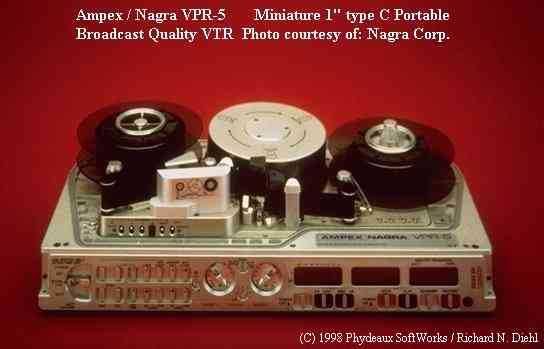
It got me thinking about the work I've done to establish our own clan's Family Media Network but as you can see, I take a different tack than Pogue. I've read his column and don’t always know what to make of him. If he’s such a tech maven, why should he be stymied by, or even surprised with the phasing out of tape as a storage medium? Tape? Take it from somebody who used to thread portapaks and 1” Ampex machines by hand with it. I won’t miss it!!!! No siree.


Wanna talk about classical media formats? Okay. I collected all my Dad’s super 8 films and Mom’s Bell and Howell projector to transfer my family’s heirlooms to Digital 8 and then from there, straight to the family network drive. Probably the same cheap 2Tb one that Pogue picked up. Last year, I picked up a BVU-800 for a $125 (on Ebay) last year to transfer the handful of ¾” projects I want to keep. I have a handful of portapak tapes, but most of those I’m sure I transferred to ¾” back in the 80’s. Mom just gave me 4 milkcrates with of 78’s from the 20's-40’s. Big Band and lots of RCA Victor classical pressings. Most of them pristine. Haven’t quite figured what I’m going to do with them yet, but my turntable is up and operating again after a 10 year hiatus. I've never had it on the '78 setting before, but it might be fun to rip some of that old wax to mp3.

Bennett interviewed my Dad about his mother over the phone for a school project. I have about 15 minutes of Dad reminiscing about his mother's anti-child labor marching days. This gem will be easy to deal with. I don't have to do anything. It's already an MP3 file.

Thursday, November 29, 2007

E-books not near ready for prime time:

-@v@- wrote:

Story: Will-e-books-ever-be-a-best-seller?

Amazon and Sony better hope Apple doesn't show up in this space, because the one tipping point feature that trumps price, killer "app-titude" or usability, i.e., “design cool" just ain't there. No eye appeal in either e-book package. These things are both butt ugly; they scream prototype even though they aren't.


Nobody reads 170 books at one time, so who cares, capacity is a non-starter at this point. Add to which they're way out of the price range of the one market they make the most sense for, the poor beleaguered students who have to cart dozens of monster textbooks around in their groaning backpacks. If my kids could replace all their textbooks with the one device they plug into their school's server or the net, I'd jump just to save them the backstrain and myself the doctors’ bills. But for now, fuggedaboudit!

Back to the drawing board kids, but don't take too long. Mark this. Apple will sit out a couple of cycles, then jump in with a sexy, far prettier face, toss in some of the cool interface doodads they do so well and we will all go oooh and aaah and cue up overnight at our nearest Apple Stores to buy the first ones.. Then they'll further solidify their market by giving them away to public schools along with Itunes textbook downloads and Steve Jobs will finally and irrevocably become William Randolph Hearst.

Tuesday, May 22, 2007

Skating on the Superficial

Rescuing Masculinity for What It's Worth

I’m reading The Road with my 13 year old. We’re about two-thirds through it and I pretty much know how it’s going to end. My boy snuck a look at the ending and he says he also knows the outcome. But we press on—a chapter a night. There’s not a lot of plot, suspense or character arc here. This doesn’t bother me. Maybe it deserves a Pulitzer, maybe not. Maybe this isn’t the best book I’ve read, not even this year, but I’m glad to be reading it and glad to be reading it with my son. I certainly don’t think it deserved the round pounding it received from the Inky’s book critic.

I had my boy read the withering review to me early last week and I was kinda surprised when young Master W. agreed with Mr. Wilson’s critique of McCarthy’s narrative conventions, but not with his overall assessment of the book. Sure, of the short list of people who did it both first and best, McCarthy will never out-hem Hemingway, or fitz Fitzgerald, but The Road isn’t exactly the facile fast food sizzler of Love Story or Celestine Prophecy ilk, despite the fact that it’s being hawked at Oprah’s Book Club, right beneath a chastely voluptuous (but yummy) “Bras of Summer” banner ad.

Despite a million little pieces of egg on her face, a flyover the big O’s site reveals titles like As I Lay Dying, A Hundred Years of Solitude and Anna Karenina. Her O’ness seems almost self-consciously intent on steering her tube fed demographic toward big L literature. Years from now, inquiring minds may yet debate whether The Road deserves such a capital letter—whether it was oracular or just apocryphal goth. But it deserves whatever attention it gets, then or now, because The Road has grit.

I must confess I hadn’t know Cormac McCarthy’s work very well. I haven’t even google-imaged him yet because I’m savoring my precognitions. I want to see how my image of him jibes with the real deal. With celebrities, I find the reality mostly pales measured next to my preconceptions. I want a ruddy-headed, freckled David Caruso meets Charles Bukowski type. Craggy face. Pockmarks. A drinker's nose. Except that the title All the Pretty Horses is a bit of a discordant note. Kinda fem, more suited to a Dominique or an Emilie than a Cormac. I start all my journeys on the most superficial of terms. What do I know?

Ok, curiosity got the better of me. The last link didn’t exist before I wrote the previous sentence. And now I’m a little disappointed. The romanticized Charles Joseph McCarthy Jr. is replaced with a www reality thumbnail. He looks a bit more clipped and buttoned down than I thought he would. Ex-USAF. He still doesn’t look like a “pretty horses” kinda guy, but it still makes sense. He makes sense. I understand his protagonist’s relationship with his son in this ghostly, monochromatic world they’re passing through. The dying man lives for only one thing. Love for the boy. The kind of love that kills without blinking to protect him. The kind of love that would die, with a song in its heart, rather than see the child hurt. It’s a fierce, joyful animal thing. It starts when you see them pulled out of their momma and placed before you on the warming table. It hasn’t diminished an iota in all these years. Twenty-first century life is overstuffed, supersized. It’s easy for the love between a father and a son to get lost in all the chromatic distractions of a life with so many choices.

With the first gray light he rose and left the boy sleeping and walked out to the road and squatted and studied the country to the south. Barren, silent, godless. He thought the month was October but he wasn’t sure. He hadn’t kept a calendar for years. They were moving south. There'd be no surviving another winter here.

When it was light enough to use the binoculars he glassed the valley below. Everything paling away into the murk. The soft ash blowing in loose swirls over the blacktop. He studied what he could see. The segments of road down there among the dead trees. Looking for anything of color. Any movement. Any trace of standing smoke. He lowered the glasses and pulled down the cotton mask from his face and wiped his nose on the back of his wrist and then glassed the country again. Then he just sat there holding the binoculars and watching the ashen daylight congeal over the land. He knew only that the child was his warrant. He said: If he is not the word of God God never spoke.

In pre-apocalyptic America, young men without models (from literature or real life) of how to be a man, turn to mass media and encounter two polar and equally loathsome caricatures—the neo-Neanderthal, misogynist, hip hop blingmeister and the emasculated, marginalized, post-modern milquetoast failure. Both leave one with the cheesy slide from masculinity to machismo to misomania. Alas in the 21st Century our spears have been beaten into laptops. Our questions of survival are more existential than literal. Men are still going off to the woods, beating on drums and trying to reconstitute their masculinity through metaphors. Masculinity’s virtues seem virtually, but not entirely extinct. Without actually going to war, we get precious few chances to be warriors. Save in the loving of our children. Cormac and I are together on that.

Wilson snipes at the scientific credibility of McCarthy’s post-apocalyptic limbo. The Inquirer critic calls The Road “just the latest installment in the pornography of despair.” Possibly, because I’m reading it to a 13 year old, the phrase hit me with the impact of a slab of raw liver to the puss.

Master Weiss: What are we reading tonight, Dad?
Mister Weiss: I thought we’d indulge in some more of that pornography of despair, son.
Master Weiss: Gosh dad, aren’t I a little young for that?
Mister Weiss: No son, once you get acclimated to the harder stuff, you realize that Tolkien, Rowling, Twain, Lewis, Lessing, Lem and all the rest of the ones we’ve read over the years are just pantywaists and poofters. No more soft-core depression or Hollywood endings for you me bucko. Time to break out the Vonnegut. `My name is Ozymandias, King of Kings: Look on my works, ye mighty, and despair!'
Master Weiss: Dad, your rant is cutting into my read time.
Mister Weiss: Okay.

Wilson utterly misses the point. Veracity, color and hope don’t live in landscapes, favorable outcomes or even in language, but in the relationship. Let’s pray it doesn’t take a cataclysm to make either the point or the men of my generation willing and holy warriors for our children. If we can’t do that, then we are not men. Happy 13th Birthday, B.
-@V@-